
In the first few days after birth, most parents spend hours watching their baby sleep, stretch, and make those tiny faces. Along the way, many notice things on their baby’s skin that seem unusual, like a patch of red, a few spots, or skin that peels like dry paint. It’s easy to panic, but most of these changes are completely normal and part of a newborn’s adjustment to life outside the womb.
A baby’s skin is thin and is still learning to protect itself. Inside the womb, it was covered by warm fluid. Now, it’s dealing with air, clothing, and touch for the first time. The change can make the skin look unpredictable during those early weeks.
Common Skin Changes in Newborns That Are Completely Normal
Red or Bluish Skin Tones
Right after delivery, a newborn’s skin often looks dark red or even purple. This happens because blood circulation is just getting started. Within minutes, as the baby begins breathing steadily, the color evens out.
Parents sometimes notice that their baby’s hands and feet turn bluish, especially when the room is cool. That’s called acrocyanosis. It’s harmless and clears up once the baby warms. Wrapping the baby snugly or keeping them close usually helps.
That Creamy White Coating
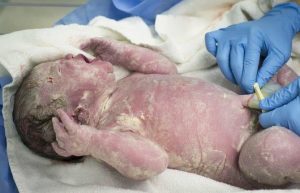
Many babies are born with a soft, white film on their skin. This is vernix caseosa, a natural coating that protects the baby during pregnancy. Vernix helps the skin stay hydrated and guards against infection. Some of it may stay on the skin for a day or two. It doesn’t need to be scrubbed off. It fades gently on its own.
Fine Hair on the Shoulders or Back
That silky hair you may see on your newborn’s shoulders, back, or arms is lanugo. It develops before birth and helps keep the baby’s temperature steady. Lanugo tends to fall out within a few weeks. It doesn’t hurt, itch, or mean anything is wrong. It’s just one of those early signs of new life.
Small White Bumps or Tiny Pimples
Tiny white bumps on the face of a newborn are called milia. They appear when small skin pores get blocked. Milia don’t need creams or wipes; they simply disappear.
Around two to four weeks, some babies also get mild acne on their cheeks or chin. This comes from hormones that were passed from the mother before birth. It may look odd, but goes away naturally.
Rashes That Come and Go
Erythema toxicum is among the most common rashes among newborns. The name sounds serious, but it isn’t. The rash looks like red patches with small white or yellow dots in the middle. It might appear one day and fade the next. It doesn’t hurt the baby and doesn’t need any special care.

Birthmarks and Skin Spots
Every baby’s skin tells its own story. Birthmarks come in many shapes and shades:
- Mongolian spots are flat, grayish patches on the back or bottom, common in darker-skinned babies. They fade as the baby grows.
- Café-au-lait spots are light brown marks that may appear at birth or later. A few small ones are common and not harmful.
- Stork bites are pink marks on the eyelids, forehead, or neck. They may show more when the baby cries and usually fade by the first birthday.

- Hemangiomas are small, raised red areas made of tiny blood vessels. Many of them grow for the first few years and then slowly fade on their own. Some may stay longer, and there are safe treatments available if needed. The most important thing is to avoid trying any treatments at home. If you ever feel unsure, your pediatrician is the best person to guide you.
- Port-wine stains are flat reddish patches that don’t fade on their own. A doctor will usually keep an eye on these as the child gets older.
Dry or Peeling Skin
Peeling skin is one of the most common things parents notice, especially on the hands and feet. It happens because the outer layer that protects the baby inside the womb starts to shed. The new skin underneath is soft and healthy. Gentle baths and a light, fragrance-free moisturizer are enough. Heavy oils or ointments aren’t needed.
When to See a Pediatrician?
Although most newborn skin changes are harmless, parents should contact a pediatrician if:
- The rash spreads quickly or has blisters.
- The baby develops a fever or looks uncomfortable.
- The skin or eyes turn yellow, and the color deepens.
- Any mark seems swollen, painful, or starts to bleed.
Most of the time, the doctor will reassure you that your baby’s skin is just adjusting, but it’s always worth checking if you’re unsure.
Final Thoughts
Newborn skin is wonderfully unpredictable. What looks strange one day often disappears the next. Understanding what’s normal helps parents stay calm through those early weeks. The spots, flakes, and color shifts are nearly always signs of growth, not illness.
If any mark or rash worries you, or if something just doesn’t seem right, parents can reach out to Dr. Sabitha Nair, a leading Pediatric Specialist in Dubai. She can guide you in recognizing what’s normal and offer care when a closer look is needed. Sometimes, reassurance from an experienced eye makes all the difference.
