
Many parents wonder about this quietly. If the baby looks fine, feeds reasonably well, and seems active, is it really necessary to keep coming in for regular visits? It can sometimes feel like you are booking appointments just to be told everything is normal.
But in the first two years, a lot happens in a very short time. Growth does not wait, and development does not pause. A baby can change noticeably in just a few weeks. That is why regular baby health checkups are spaced closer together in early life.
They are not meant to find problems. They are meant to follow a pattern.
In the Newborn Period
The first few visits usually happen soon after birth. In these early weeks, feeding, weight gain, and general adjustment are the main focus. Babies lose some weight initially and then regain it. Some settle into feeding quickly. Others need small adjustments.
Even when everything appears fine at home, these visits help confirm that growth is moving in the right direction. Small things noticed early are often easier to guide gently.
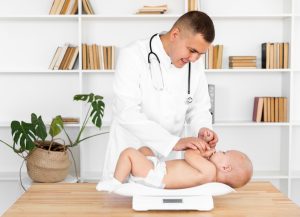
Newborn visits also give parents space to ask questions they may not even know how to phrase yet. Sometimes reassurance is just as important as examination.
Weekly till weight stabilises and then monthly till 1 year
During the First Year
The first year tends to have more frequent appointments. Babies grow rapidly, and development unfolds quickly.
You may notice that visits are usually planned around certain ages, for example, around 2 months, 4 months, 6 months, 9 months, and 1 year. Some of these coincide with vaccinations, but the visit itself is about more than that.

Weight, length, and head growth are measured and plotted over time. What matters is not one number on one day, but the pattern across months.
Movement, interaction, and early communication are also observed. Is the baby lifting the head steadily? Rolling? Sitting with support? Responding to sounds? These milestones do not have to be exact or rushed. What matters is steady progress.
5th month take a session on food feeding habits to be developed.. what and how to give..what not to give. Expectation
Handling emotional development of child
In the Second Year
After the first birthday, growth slows compared to infancy. Because of this, checkups may be spaced slightly further apart, often around 15 months, 18 months, and 24 months.
At this stage, the focus shifts a little. Walking, speech, feeding independence, and social interaction become more noticeable. Toddlers begin to show clearer preferences and stronger personalities. Regular visits help see whether development is unfolding naturally.
Some concerns are subtle and only become clear over time. Seeing the same child across visits makes it easier to understand what is typical for them.
What Actually Happens During a Checkup?
Parents sometimes expect a quick weigh-in and little else. In reality, a checkup often includes quiet observation.
Growth measurements are taken. Feeding patterns are discussed. Sleep is asked about. Movement and coordination are watched. Sometimes it is the way a baby reaches for an object or looks toward a voice that gives useful information.
It is also a chance for parents to bring up things that may feel small but have been sitting in their minds – a rash that keeps returning, a feeding struggle, a change in behavior.
These conversations matter.
If Your Baby Seems Completely Fine
It can be tempting to delay a visit when everything looks normal. But many developmental patterns are easiest to understand when followed regularly rather than checked only when something seems wrong.
One visit shows a moment. A series of visits shows a story.
When to Come Sooner
There are times when waiting for the next routine appointment is not ideal. Sudden feeding refusal, poor weight gain, repeated high fever, breathing difficulty, unusual sleepiness, or delayed milestones are reasons to seek review earlier.
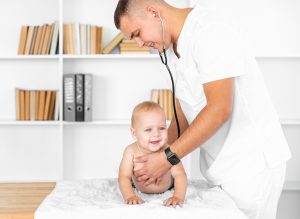
Parents often sense when something feels different. That instinct should not be ignored.
A Thought for Parents
Scheduling baby health checkups is not about being overly cautious. It is about staying connected to your child’s growth over time. The early years pass quickly, and regular visits simply help ensure that development is moving steadily.
If you are not sure about how often you should get baby health checkups in Dubai, speak with Dr. Sabitha Nair, an Indian Paediatric Doctor. She can help you plan a schedule that suits your child’s stage and your family’s comfort.
Frequently Asked Questions
How often are babies usually seen in the first year?
Most babies are reviewed several times during the first year because growth and development change quickly.
Are checkups necessary if my baby looks healthy?
Yes. Regular visits help track patterns over time, even when no concerns are obvious.
When should I book an earlier visit?
If there is poor feeding, slow weight gain, high fever, breathing concerns, or delayed development, it is best not to wait.